
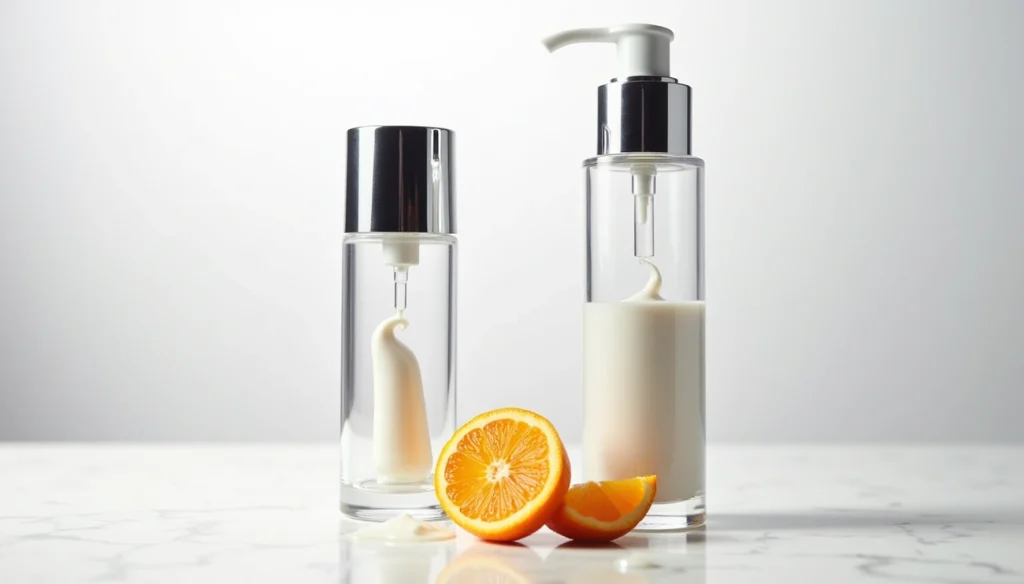
Did you know that every time you open your skincare product, its active ingredients could be losing potency? Airless packaging benefits extend far beyond simple convenience, actually protecting formulas from degradation and contamination.
When we use traditional jars or tubes, we expose products to air and bacteria, reducing their effectiveness over time. However, airless pump packaging creates a sealed environment that prevents oxidation, keeping powerful ingredients like vitamin C stable and effective for longer periods. Additionally, airless skincare packaging uses innovative piston systems that push products upward, ensuring nearly 100% product evacuation—meaning we can use every last drop of our favorite formulations.
Furthermore, many airless packaging solutions now incorporate sustainability features. The adoption of airless refill systems can reduce environmental impact by more than 70%, making them a smart choice for both our skin and the planet. In this article, we’ll explore the science behind how airless packaging works, why it’s superior for preserving product integrity, and how it delivers both precision application and eco-friendly benefits.
How Airless Packaging Works: Piston and Pouch Systems
Airless packaging operates on two distinct dispensing technologies that create sealed environments for product protection. Unlike traditional containers, these systems work without dip tubes, instead relying on vacuum pressure to deliver products efficiently.
Piston-Based Dispensing Mechanism
The piston system forms the backbone of most airless packaging designs. At its core, this mechanism features a tight-fitting piston at the base of the container that moves upward as product dispenses. Essentially, when I press the pump, atmospheric pressure creates a vacuum effect inside. This vacuum causes the sealed piston to rise progressively, pushing product toward the nozzle without allowing air to enter the container. The precision engineering behind this system enables consistent dosing while simultaneously protecting formula integrity. The piston must maintain perfect balance – too tight and excessive friction prevents movement, too loose and leaks occur.
Flexible Pouch System for Vacuum Sealing
Meanwhile, the flexible pouch system (sometimes called bag-in-bottle) offers an alternative approach. In this design, products are contained within an inner flexible bag housed inside a rigid outer container. During use, the pouch gradually compresses as the pump creates pressure. Since the collapsible inner bag contracts completely after each use, no replacement air enters the formula chamber. This complete product isolation makes pouch systems particularly suitable for ultra-sensitive formulations that react negatively to even minimal oxygen exposure. Notably, some advanced designs feature multi-layered pouches that provide enhanced barrier properties.
Airless Container Structure and Components
Both systems share common structural elements that work together to create their protective benefits. Primary components include an outer shell (container), dispensing mechanism (pump assembly), and either a piston or flexible pouch. The pump assembly itself contains several precision-engineered parts: a small piston, connecting rod, spring, body, and valve – all requiring exact specifications. Many modern designs also incorporate specialized nozzles and caps that further prevent air ingress between uses. Throughout all variations, the principle remains consistent – isolating the formula from external contamination while maintaining precision dispensing capabilities.
Preserving Product Integrity Through Oxygen Control
Oxygen exposure represents one of the greatest threats to skincare product integrity. The moment air contacts sensitive formulations, a countdown to degradation begins, gradually reducing efficacy with each use.
Oxidation Prevention for Vitamin C and Retinoids
Potent active ingredients like vitamin C and retinol deteriorate rapidly when exposed to oxygen. Vitamin C quickly oxidizes in the presence of air, resulting in a brownish discoloration that signals diminished potency. Similarly, retinoids break down when repeatedly exposed to oxygen, reducing their anti-aging benefits. Airless skincare packaging creates a sealed environment that prevents this deterioration process. The vacuum-based dispensing mechanism ensures that the remaining product inside never contacts air, preserving its chemical stability throughout its use period. This protection is especially vital for clean beauty formulations where ingredient potency directly correlates with effectiveness.
Barrier Against Microbial Contamination
Beyond oxidation, traditional packaging introduces another risk: bacterial contamination. Every time fingers contact product in jars or tubes, microbes can transfer into the formula. Consequently, these contaminants potentially trigger acne, irritation, or infections in users. Airless pump packaging eliminates this risk through a closed dispensing system where the formula remains untouched until application. The hermetically sealed design prevents bacteria from entering the container, maintaining hygiene throughout the product’s lifespan. For consumers with sensitive skin conditions like rosacea or eczema, this contamination barrier proves particularly valuable.
Shelf Life Extension Without Preservatives
Perhaps most impressive is how airless packaging extends product longevity without chemical preservatives. Traditional formulations require substantial preservative systems to prevent microbial growth. Conversely, airless containers naturally extend shelf life by preventing environmental exposure that leads to contamination. This preservation method enables brands to reduce or sometimes eliminate preservatives entirely, creating gentler formulations for sensitive skin types. For products containing antioxidants or natural extracts, this preservation mechanism can double the effective shelf life compared to conventional packaging.
The controlled oxygen environment of airless packaging thus creates a triple benefit: ingredient stability, microbial protection, and extended effectiveness without chemical preservatives.
Precision Dispensing and Product Utilization
One frustrating aspect of traditional packaging is discovering product trapped at the bottom of containers. Airless pump packaging tackles this issue through engineering that prioritizes both precision and efficiency.
Consistent Dosage with Airless Pump Packaging
Airless systems deliver remarkably uniform amounts with each press of the actuator. In contrast to traditional pumps where output varies based on pressure applied, airless packaging dispenses the same measured dose consistently. This precision proves invaluable for expensive formulations where exact application matters. Moreover, the controlled dispensing mechanism prevents overuse and spillage, making skincare routines more efficient. This accuracy extends regardless of container position—airless pumps function perfectly whether upright, sideways, or even inverted, offering 360-degree dispensing flexibility that traditional packaging cannot match.
90%+ Product Evacuation Rate
The economic advantage of airless packaging becomes evident in its remarkable evacuation rates. These systems enable up to 99% product retrieval, ensuring consumers receive virtually everything they’ve paid for. As the internal piston rises or the flexible pouch collapses, product moves upward consistently, leaving minimal residue inside. For premium skincare products with high price points, this near-complete evacuation represents significant value. Primarily, this benefit comes from the vacuum-based dispensing mechanism that progressively pushes all content toward the nozzle without requiring shaking or scraping.
Reduced Residue Compared to Dip Tube Systems
Conventional pump bottles utilize dip tubes that often fail to reach product at container edges and corners. Undeniably, this design limitation results in noticeable waste—particularly evident when only a small amount remains. In addition, traditional systems frequently trap product in the tube itself. Airless packaging eliminates these issues by replacing dip tubes with either rising pistons or collapsing pouches. The difference becomes most apparent with thicker formulations like serums and creams, where dip tubes struggle but airless systems excel. To this end, the rising piston design enables consumers to access even the last portions of their investment without frustration.
Sustainability and Refillability in Airless Skincare Packaging
Beyond preserving formulas, modern airless packaging now addresses environmental concerns through innovative sustainability features. The beauty industry has shifted toward eco-conscious solutions that maintain product protection while reducing planetary impact.
Refillable Cartridge Systems with PCR Materials
Refillable airless systems represent a major advance in sustainable beauty packaging. These designs feature a durable outer container that remains reusable while only the lightweight inner cartridge requires replacement. Many manufacturers now produce these cartridges using post-consumer recycled (PCR) materials—up to 75-100% PCR by package weight. This approach supports subscription-based product models where brands provide replacement cartridges rather than entirely new containers. The Airless Shuttle system, for instance, includes three recyclable airless cartridges fixed within a reusable dispensing system, creating a personalized experience for daily skincare routines.
Mono-Material Design for Easy Recycling
Currently, airless packaging increasingly utilizes mono-material construction—primarily polypropylene (PP)—to enhance recyclability. Unlike traditional pumps containing various plastics and metal springs, these designs avoid mixed materials that complicate recycling. The mono-material approach helps create closed-loop systems where components move smoothly through existing recycling streams. Despite engineering challenges like friction between all-PP components, manufacturers have developed successful mono-material pumps that match conventional performance standards.
Environmental Impact Reduction: 70% Less Waste
The environmental benefits of refillable airless systems are substantial. PCR Airless Bottles can reduce plastic usage by 70% compared to standard syringe-type airless bottles. Some innovative systems like BOTTLESS’s Airless Pak claim to cut plastic consumption by up to 95%. These packages typically achieve near-100% product evacuation, minimizing both product and packaging waste.
Conclusion
Airless packaging stands as a revolutionary advancement in skincare and cosmetic product protection. Throughout this article, we examined how these innovative systems work through either piston-based mechanisms or flexible pouch designs, both creating sealed environments that shield formulations from external contamination.
The benefits certainly extend beyond basic product preservation. Consequently, sensitive ingredients like vitamin C and retinoids maintain their potency significantly longer when protected from oxidation. Additionally, the elimination of bacterial contamination means our skincare remains pure throughout its usage period, while the reduced need for chemical preservatives makes formulations gentler on sensitive skin.
Precision dispensing represents another compelling advantage. Users receive consistent, measured doses with each pump, regardless of the container’s position. Furthermore, the near-complete product evacuation rate ensures we get our money’s worth from premium skincare investments—no more wasted product trapped at the bottom of containers.
Perhaps most importantly, modern airless packaging now addresses environmental concerns through refillable cartridge systems and mono-material construction. These sustainable designs can reduce plastic usage by up to 70%, aligning our beauty routines with eco-conscious values.
The science behind airless packaging ultimately delivers a trifecta of benefits: superior product protection, enhanced user experience, and reduced environmental impact. Therefore, as consumers increasingly demand both effectiveness and sustainability, airless packaging will undoubtedly remain at the forefront of cosmetic packaging innovation, offering both practical and ecological advantages for our skincare needs.
Cosmetic Packaging Suppliers Pakistan
FAQs
Q1. What exactly is airless packaging and how does it work? Airless packaging is a innovative dispensing system that uses a vacuum or piston mechanism to protect products from air exposure. It typically consists of an outer container and an inner chamber that houses the product. When the pump is pressed, the product is dispensed without allowing air to enter, preserving its integrity and extending its shelf life.
Q2. What are the main benefits of using airless packaging for skincare products? Airless packaging offers several key benefits for skincare products. It prevents oxidation of sensitive ingredients like vitamin C and retinoids, extends shelf life without additional preservatives, provides consistent dosage with each pump, and allows for nearly complete product evacuation. Additionally, it maintains product hygiene by preventing bacterial contamination.
Q3. How does airless packaging contribute to sustainability in the beauty industry? Airless packaging contributes to sustainability through refillable cartridge systems, the use of post-consumer recycled (PCR) materials, and mono-material designs that enhance recyclability. Some airless systems can reduce plastic usage by up to 70% compared to traditional packaging, aligning with eco-conscious consumer values.
Q4. Can airless packaging extend the shelf life of skincare products? Yes, airless packaging can significantly extend the shelf life of skincare products. By creating a sealed environment that prevents oxidation and microbial contamination, it keeps formulations stable for longer periods. This protection mechanism can double the effective shelf life of products containing antioxidants or natural extracts compared to conventional packaging.